
Announcements
Events
Insights
23rd November 2026
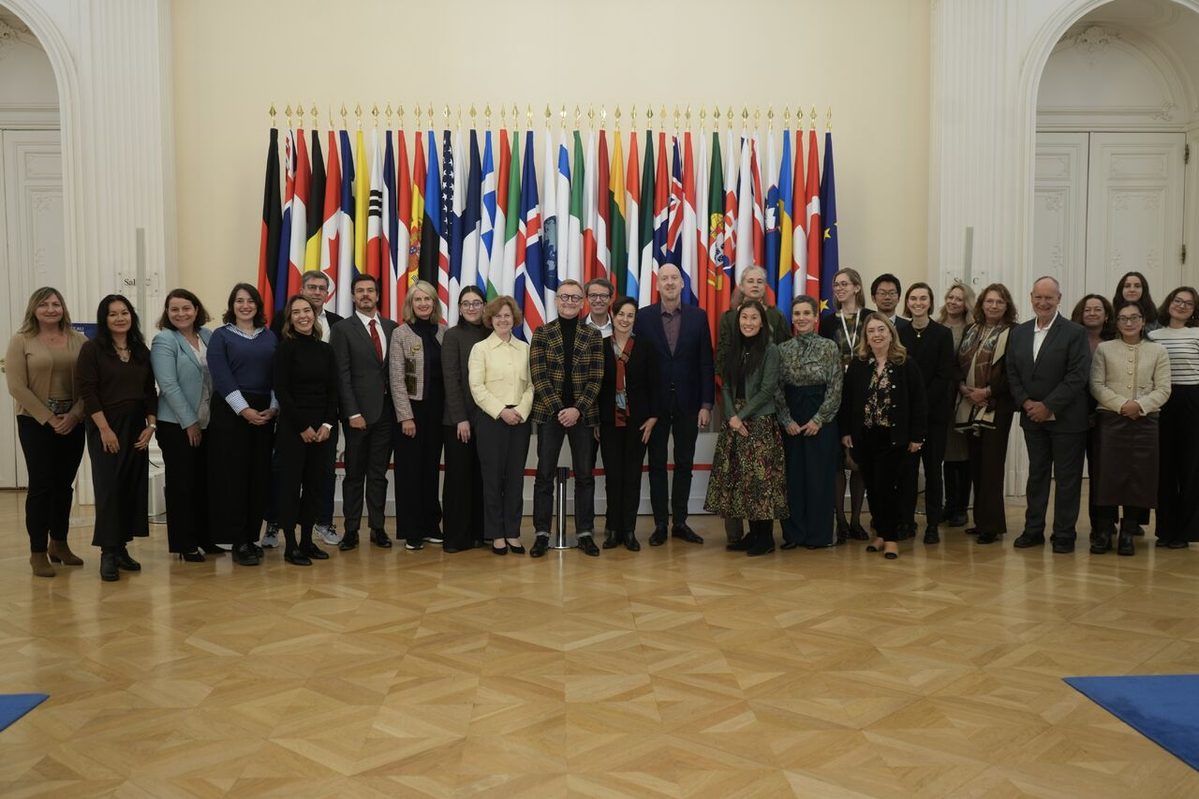
Paris, France, 13 November 2026
GAN Global and Business at OECD brought together business leaders, policymakers, and skills experts at the OECD Headquarters in Paris for the joint event, "Pathways to Prosperity: How Companies Build First-Job Opportunities Through Apprenticeships and Work-Based Learning." The event explored how employers and governments can work together to strengthen pathways into employment and equip young people with the skills needed to thrive in a rapidly changing labour market.
The event opened with remarks from Kathryn Rowan, Executive Director of GAN Global, and Hanni Rosenbaum, Executive Director of Business at OECD who emphasized the unique role employers play not only as recruiters of talent, but as active partners in shaping how skills are defined, developed, and recognised. They highlighted the persistent paradox facing labour markets across many countries: while employers continue to report skills shortages and difficulties filling vacancies, many young people struggle to access meaningful employment opportunities. Apprenticeships and work-based learning, were noted as one of the most effective solutions for bridging this gap.
A fireside discussion featuring Bettina Schaller, Chair of Business at OECD’s Employment, Labour & Social Affairs Committee and SVP Head of Group Public Affairs at The Adecco Group, and Kate Brosnan, Chair of Business at OECD’s Education Committee and Vice President at Kerry Group, examined the findings of the new Business at OECD report, Supporting Today’s Entry-Level Workers in an Evolving Labour Market. The discussion highlighted growing concerns around skills mismatches, evolving employer expectations, and the increasing importance of practical experience and transferable skills for entry-level workers.
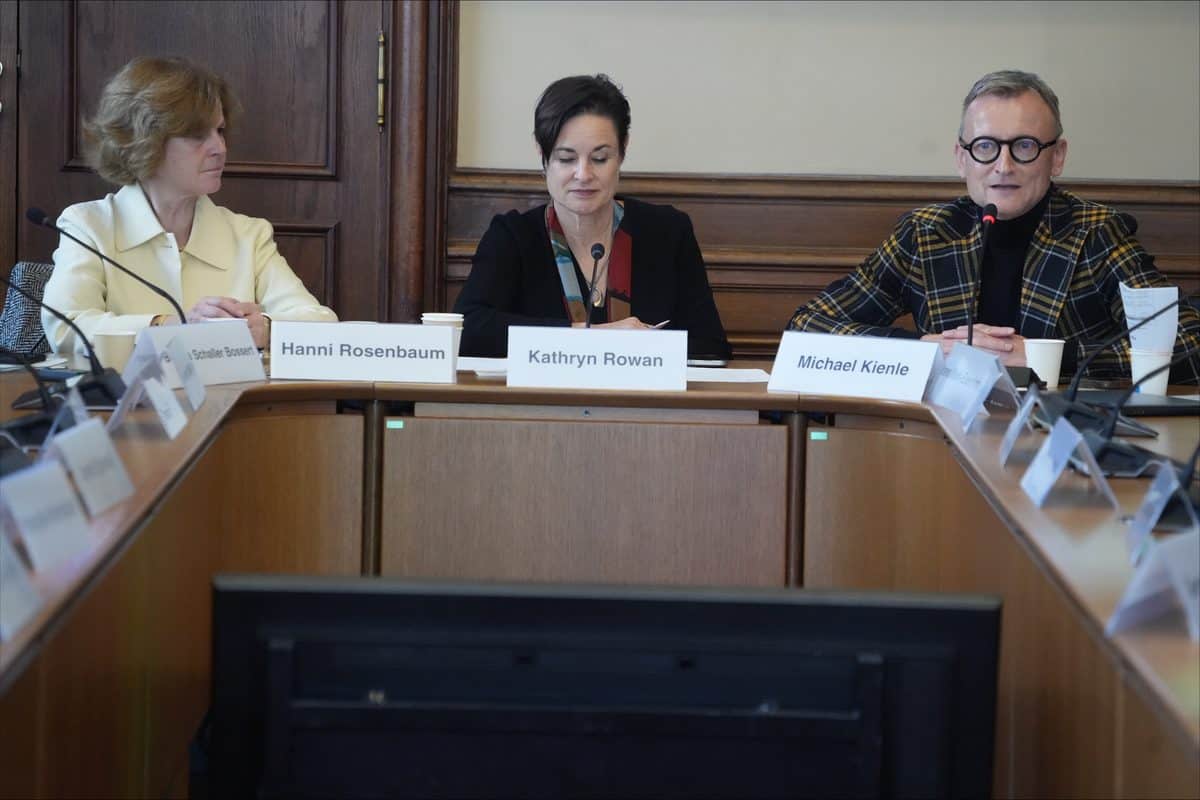
Key findings presented during the event underscored that while young people are more educated than ever, educational attainment does not always translate into the skills employers need. Employers increasingly value problem-solving, critical thinking, teamwork, adaptability, and practical workplace experience alongside technical competencies. Apprenticeships and other forms of work-based learning were identified as critical mechanisms for helping young people develop these capabilities while supporting business competitiveness.
The second session showcased examples of successful partnerships between business, education providers, and government institutions. Presentations from Irene Mark-Eisenring of Bühler, Patrick Stolz and Jonna Sjövall of UBS, Peter Rock of Westvic Staffing Solutions, and Jennie Magiera of Google demonstrated how organisations across sectors are investing in apprenticeships, early-career programmes, upskilling, and work-based learning initiatives to prepare talent for the jobs of today and tomorrow.
Despite representing different industries and national contexts, speakers shared several common perspectives. Strong public-private partnerships emerged as a critical success factor for creating effective and scalable work-based learning programmes. Participants highlighted the importance of close collaboration between employers, governments, and education providers to ensure training reflects labor market needs and creates meaningful employment outcomes.
Discussions also reinforced the business case for apprenticeships. Employers emphasised that work-based learning is not simply a social responsibility initiative but a strategic investment in future talent. By developing internal talent pipelines, businesses can address skills shortages, improve workforce resilience, and support the retention and progression of young employees. At the same time, apprenticeships deliver wider societal benefits by expanding access to employment, promoting inclusion, and strengthening connections between education and the labour market.
A recurring theme throughout the event was the need for stronger policy support to help employers, particularly for small and medium-sized enterprises, to invest in apprenticeship and training opportunities. Participants identified simplified regulatory frameworks, stronger alignment between education systems and labor market needs, recognised and portable qualifications, and targeted incentives for work-based learning as important enablers of success. Government support was recognised as particularly important in helping more employers participate in high-quality apprenticeship programs and expanding opportunities for young people.
As technological transformation continues to reshape the world of work, speakers stressed that continuous skills development will become increasingly important. Apprenticeship systems must evolve alongside changing occupational requirements, combining digital and AI-related capabilities with uniquely human skills such as creativity, collaboration, communication, and adaptability.
The event concluded with reflections from El Iza Mohamedou, Head of the OECD Centre for Skills, and closing remarks from Michael Kienle, Chair of GAN Global and Global Vice President Talent Acquisition at L'Oréal. Together, speakers reinforced a shared message: while there is no single model for apprenticeship success, the strongest systems are built on collaboration, industry leadership, quality learning experiences, and a long-term commitment to investing in people.
For GAN, the event reaffirmed the importance of employer leadership in addressing global skills challenges and creating sustainable pathways into employment. Through continued collaboration with partners such as Business at OECD, GAN remains committed to advancing high-quality apprenticeships and work-based learning opportunities that benefit learners, businesses, and societies alike.
Business at OECD Policy Paper:
Related Articles
See all articles
GAN Global and Partners Rally African Stakeholders to Bridge the Skills Gap for Youth
READ

Advancing quality apprenticeships through value chain collaboration in South Africa
READ
A year in motion: GAN Global’s General Council reflects on progress and what comes next
READ

New Zealand Study Highlights the Power of Multiple Pathways to Skills and Employment
READ
