
Events
13th April 2026
As economies navigate the twin green and digital transitions, the question is no longer whether skills systems need to change, but how fast and how collaboratively they can do so.
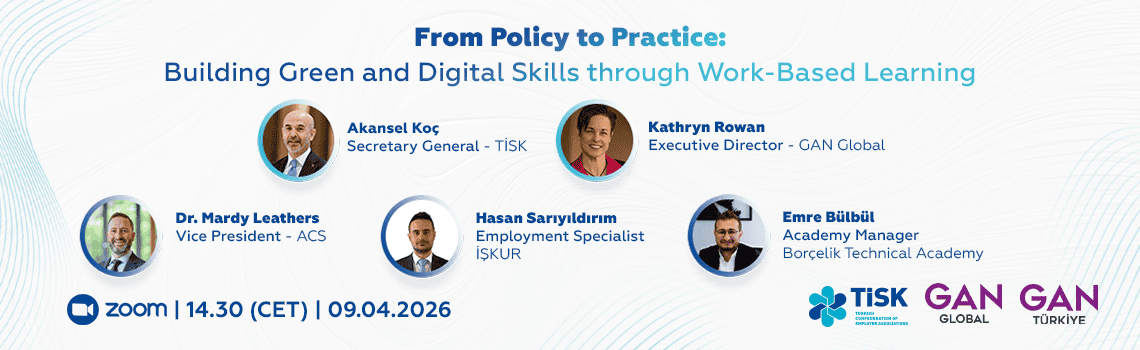
On April 9th, GAN Global, GAN Türkiye, and the Turkish Confederation of Employer Associations (TİSK) brought together public and private sector leaders for a webinar exploring how work-based learning (WBL) and apprenticeships can turn policy ambition into practical and future‑ready skills solutions.
The webinar, From Policy to Practice: Building Green and Digital Skills through Work-Based Learning, convened perspectives from Türkiye and beyond, highlighting how employers, governments, and training institutions can work together to prepare people for a rapidly changing world of work.
Opening the session, Mr Akansel Koç, Secretary General of TİSK, discussed the growing importance of WBL as Türkiye advances its green and digital agenda. With global climate commitments and technological change reshaping labor markets, he emphasized that supporting both young people and the existing workforce through practical training is essential to ensuring a just and inclusive transition.
The discussion took place against the backdrop of Türkiye’s recently announced government package to strengthen school‑to‑work transitions, expand youth employment opportunities, and address skills mismatches. The scale and ambition of this initiative signal strong political commitment to improving labor market outcomes, particularly for young people.
GAN Global perspective: why WBL matters now
In her opening remarks, Kathryn Rowan, Executive Director of GAN Global, framed the conversation from a global perspective.
“Work-based learning, especially apprenticeships, sits squarely at the intersection of today’s challenges and opportunities,” she noted. “It allows companies to build the talent pipelines they need, while giving individuals the skills, confidence, and hands‑on experience to thrive in a changing world.”
Ms. Rowan highlighted that employers across sectors are stepping up not only out of social responsibility, but because the business case is clear. Quality apprenticeships help reduce recruitment costs, increase innovation, strengthen employee engagement, and build adaptable, future‑ready workforces.
Green and digital skills in action
Bringing an international perspective, Dr. Mardy Leathers, Vice President of Adaptive Construction Solutions (ACS) and the GAN USA lead, shared how apprenticeships are supporting large‑scale infrastructure, renewable energy, and digital transformation projects in the US.
From renewable energy installations to data centers powering artificial intelligence, Dr. Leathers shared how quality apprenticeship models are building the skilled workforce required for the green and digital economy while ensuring fair labor standards and inclusive access to opportunity.
His contribution reinforced a key message of the session: green and digital transitions are already happening on the ground, and WBL provides one of the most effective tools to ensure workers are not left behind.
Emre Bülbül, Academy Manager at Borçelik Technical Academy, shared a private sector perspective on how a company‑led training academy can serve both business needs and broader social goals.
Operating in the heavy industry context in Türkiye, Borçelik has invested in a comprehensive WBL ecosystem that combines classroom learning, hands‑on training, simulations, and certification aligned with national occupational standards. The Academy places a strong emphasis on youth and women’s empowerment, actively working to increase female participation in technical roles traditionally dominated by men. Mr. Bülbül’s presentation demonstrated how “the factory can be the classroom”, and how immersive workplace learning can accelerate skills development, improve employability, and strengthen local talent pipelines.
Public policy and practice
From the public sector, participants heard from Hasan Sarıyıldırım, Employment Expert at the Turkish Employment Agency (İŞKUR), who outlined how WBL has become a central pillar of Türkiye’s active labor market policies.
He put an emphasis on how WBL programs are designed in direct response to employer demand, combining vocational training with real workplace experience. Mr. Sarıyıldırım also highlighted that these programs support learners through allowances and social security coverage while helping employers access talent with the right skills at the right time. Importantly, he emphasized WBL as not simply a program, but a long‑term policy approach that requires continuous adaptation as skills needs evolve, particularly in green and digital occupations.
Moving from silos to systems
Across all contributions, a consistent message emerged: WBL works best when stakeholders collaborate.
Whether through employer‑led program design, public‑private partnerships, or shared quality standards, such as the ILO’s Recommendation on Quality Apprenticeships (R208), the session highlighted the importance of moving from fragmented initiatives to system‑level approaches.
As countries grapple with skills shortages, youth unemployment, and the demands of green and digital transitions, the lessons shared during this session are clear: quality apprenticeships and WBL are not peripheral solutions, they are central to building resilient economies and inclusive labor markets.
Related Articles
See all articles
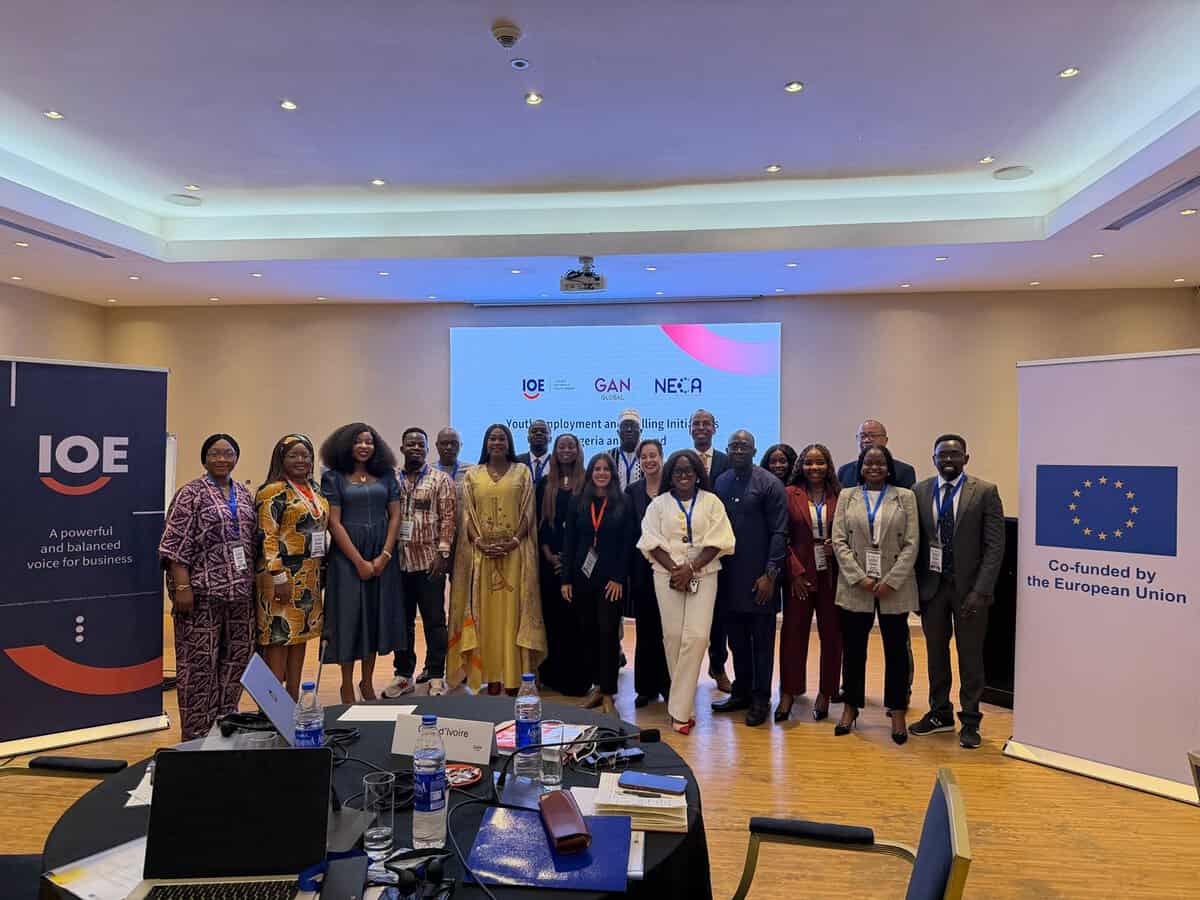
GAN Global and Partners Rally African Stakeholders to Bridge the Skills Gap for Youth
READ

Advancing quality apprenticeships through value chain collaboration in South Africa
READ
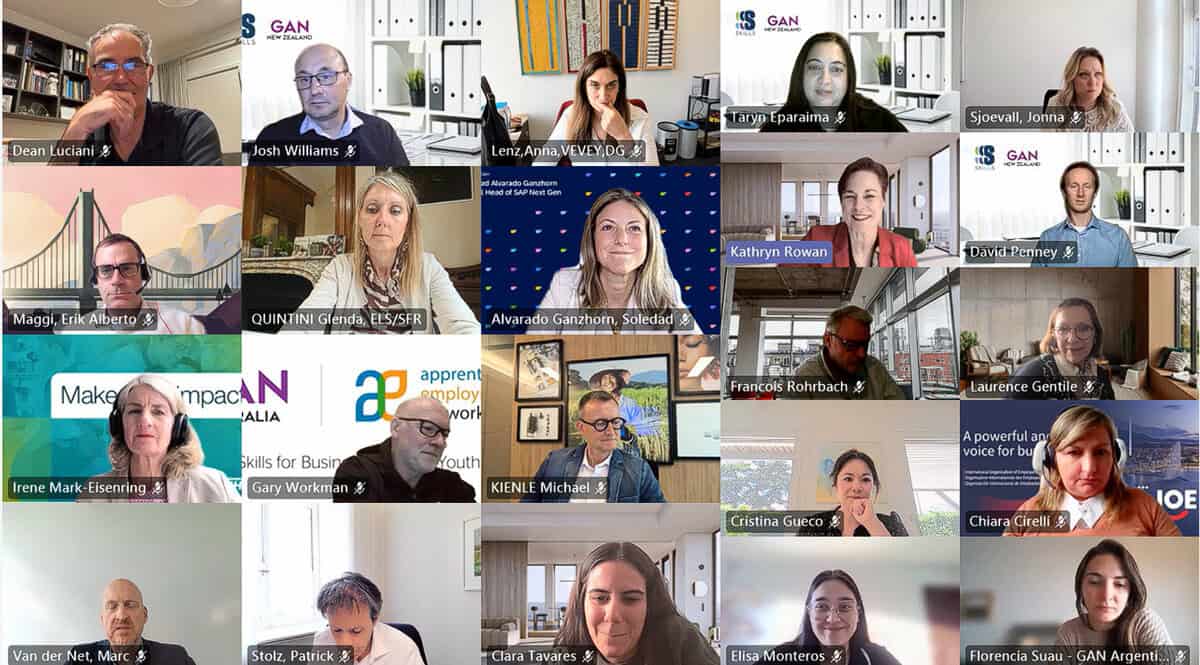
A year in motion: GAN Global’s General Council reflects on progress and what comes next
READ

New Zealand Study Highlights the Power of Multiple Pathways to Skills and Employment
READ
